






Transporting Fresh Semen Between Countries: How to Organize Delivery
Transporting semen to another country begins with coordination between laboratories and checking the route. Before collecting a fresh sample, the permissible transit time, temperature conditions, and required container must be determined. Shipment feasibility is assessed for a specific clinic and date: the availability of a flight does not in itself mean that the material can be received and used for treatment.
How a Fresh Sample Differs from a Frozen One During Transportation
During cryopreservation, semen is frozen, and the material remains under cryogenic conditions during transportation. For a fresh sample, the laboratories agree on a different preparation and delivery procedure. Cryo Transport provides a service for transporting semen between clinics. Delivery within 72 hours and a temperature of +23 °C. These parameters describe the service offered but do not establish the period for which every sample remains suitable for use or replace coordination with the receiving laboratory. Semen transportation conditions depend on the state of the material and the requirements for its subsequent use. A Dry Shipper—a container for cryopreserved biomaterial in liquid nitrogen vapor—should not be selected for a fresh sample simply because it is used to transport frozen material.
What Information Is Needed for a Preliminary Delivery Assessment
Fresh semen transportation may be necessary when partners live in different countries or treatment takes place abroad. To assess the request, the carrier needs information about the route and the clinics’ requirements. Before making an inquiry, prepare:
- the countries, cities, and addresses where the material will be collected and handed over;
- the names of both clinics and contact details for the laboratories and coordinators;
- the expected date and time of sample collection, including the time zone;
- the intended purpose of the sample and the planned date of its use;
- the receiving laboratory’s working hours and the agreed acceptance window;
- known requirements for delivery time, temperature, and container;
- information about arrangements for release, receipt, and preparation of documents.
If transporting semen to another country is still being discussed with a doctor, indicate this in your inquiry. There is no need to fill in unknown medical parameters yourself. It is enough to provide the contact details of a specialist who can clarify them. Also specify which dates are already fixed in the treatment plan and which can be changed.
How to Agree on Semen Transportation Conditions
Timing and Route from Sample Collection to Laboratory Handover
Transit time is calculated taking into account sample collection and preparation, handover to the courier, travel to the airport, waiting for the flight, connections, and delivery after landing. Transporting semen to another country must be completed within the time agreed upon by the laboratories. A short flight does not rule out a long wait before departure or after arrival.
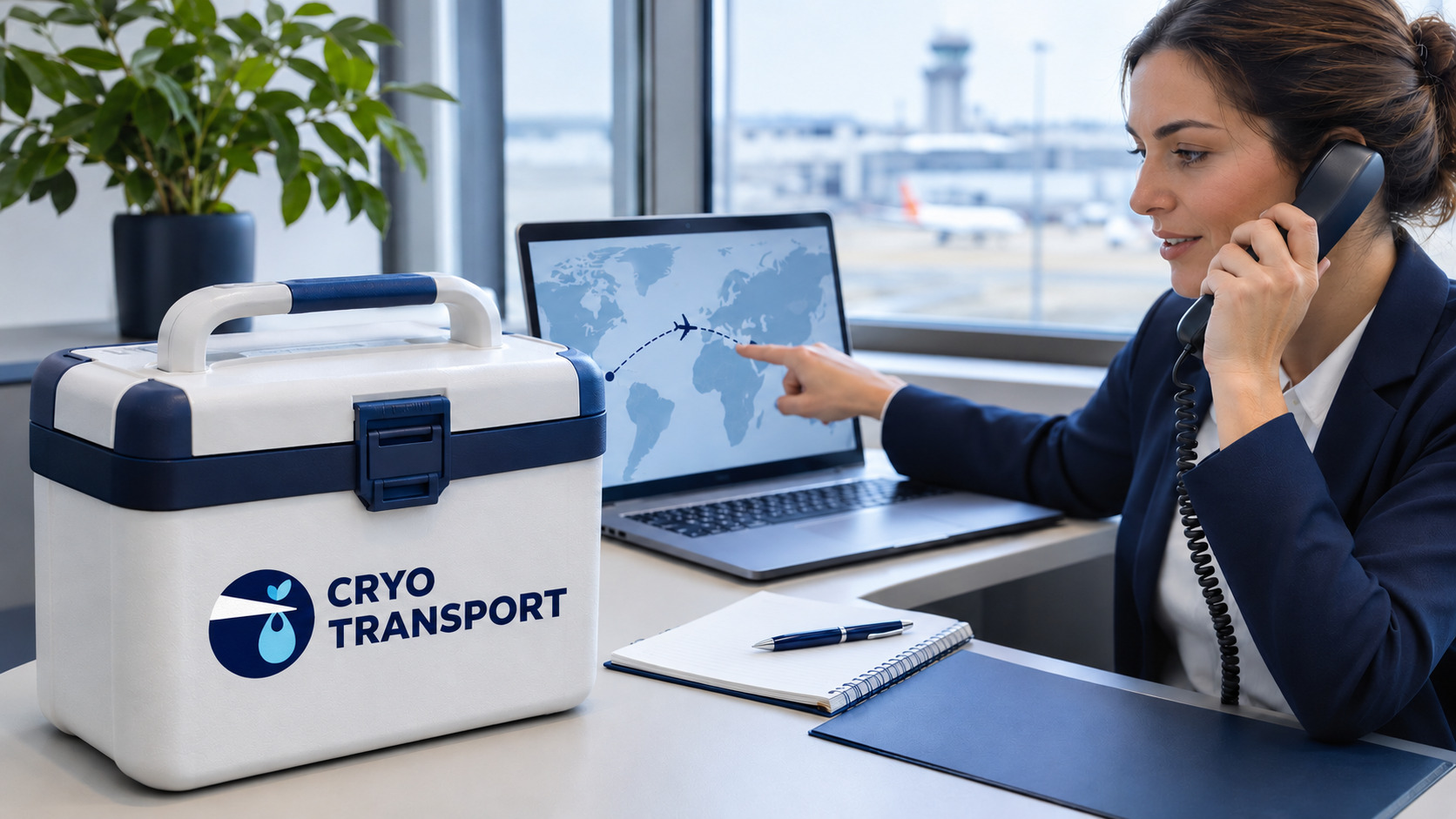
Ask for a schedule showing the handover points. It should indicate how much time is allocated for preparing the material at the clinic and when a staff member at the destination laboratory will receive it. This record will help identify any time gap overlooked when discussing flights. Flight schedules should be compared with the recipient’s working hours. If the flight arrives in the evening, clarify who will be able to receive the material. Specify local time and the time zone for each handover. The possibility of a direct flight, extra time for formalities, and alternative options should be discussed before setting the sample collection date.
Temperature Conditions According to Laboratory Requirements
Fresh semen is transported according to the temperature requirements agreed upon for the specific sample. Ask the laboratories to specify the temperature range, permissible deviations, and monitoring method. Semen transportation conditions must be equally clear to the sender and recipient: phrases such as “keep warm” or “at room temperature” leave too many questions unanswered. Do not apply advice on delivering a sample for semen analysis to international shipments. For example, the laboratory at Saint Mary’s Hospital, NHS requires a sample collected at home to be brought in for diagnostic analysis within 50 minutes. This is an instruction for a specific test, not confirmation of conditions for multi-day transportation for treatment.
Transport Container and Packaging
The primary container comes into direct contact with the sample. The outer packaging protects it during handling and helps maintain the agreed conditions. Fresh semen transportation requires both components to be agreed upon with the laboratory and carrier. Clarify who provides the container, who packages the material, and who checks that it is sealed before release.
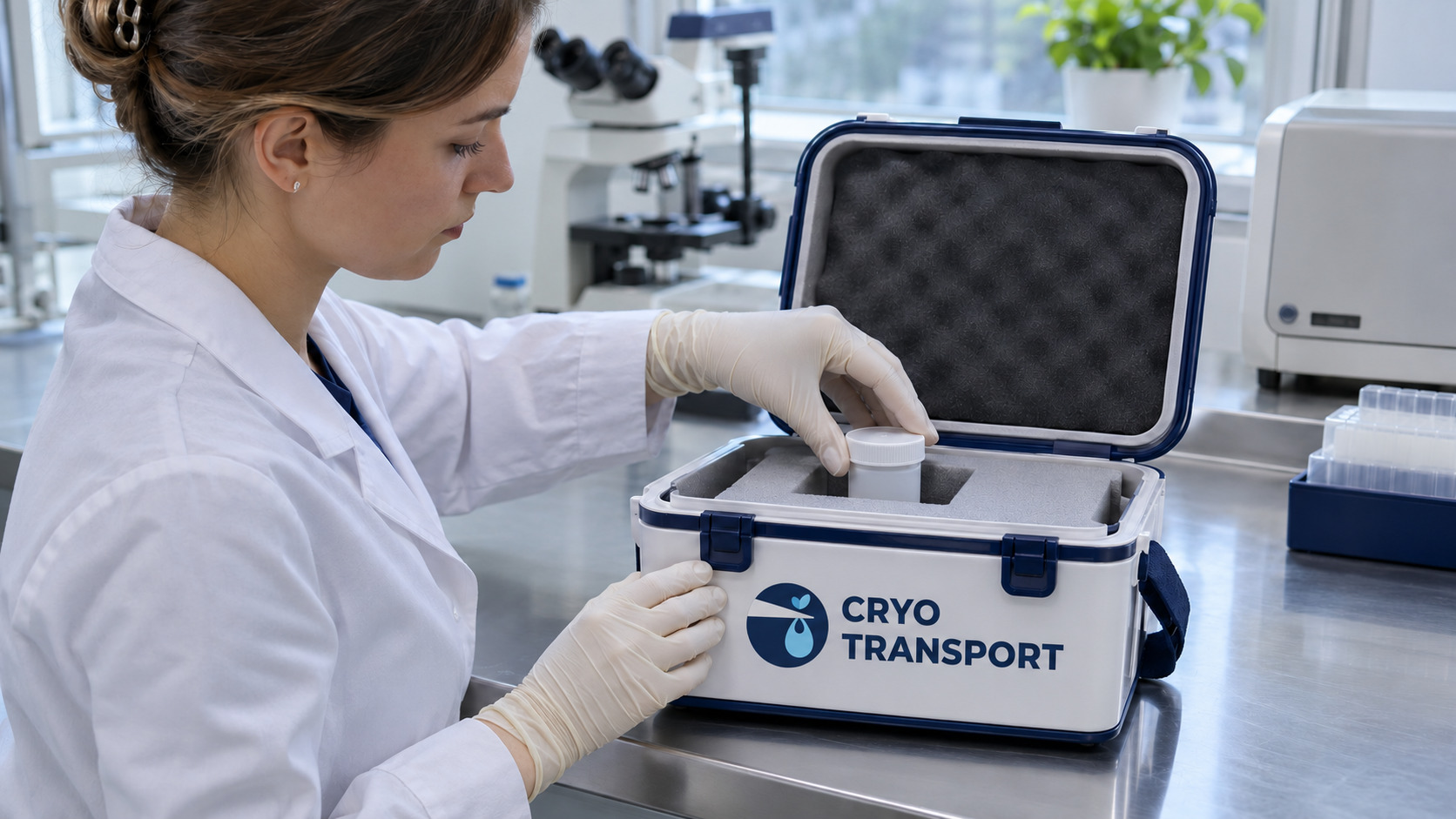
The label “sterile” alone is not enough to make a selection. The NHS instructions mentioned above specify containers tested to ensure they have no toxic effect on sperm cells. The laboratories must confirm the specific container and packaging method for your shipment. Do not transfer the material to another container or add cooling elements on your own initiative.
How the Sample Is Prepared and Handed Over
Fresh semen transportation begins with confirmation that both clinics are ready to follow the agreed plan. Those involved need to determine in advance who releases the sample and who receives it after delivery. The patient provides information and the necessary consents, the laboratories clarify the requirements for the material, and the carrier assesses the route and organizes logistics. It is convenient to arrange preparation in the following order:
- Obtain the receiving laboratory’s requirements for the sample and the time by which it must be handed over.
- Clarify whether the sending clinic can prepare the material according to these requirements.
- Agree on the route, collection time, and delivery time with the carrier.
- Check the documents required for the chosen destination.
- Confirm the release date, packaging, and contact details of the responsible staff members.
- Record the handover to the courier and then the handover to the receiving laboratory.
Fresh semen transportation may require patient consent forms, information about the sample, letters from the clinics, shipping documents, and permits. The required documents are clarified for each specific shipment. A general list found online does not confirm that the document package is suitable for crossing the borders in question. Before release, check that the sample identification matches on the documents and container. Find out how the handover time is recorded and what records the receiving party will obtain. If an issue between the clinics remains unresolved, it is better to settle it before collecting the material: resolving it during transit will have to be done within the permitted delivery time.
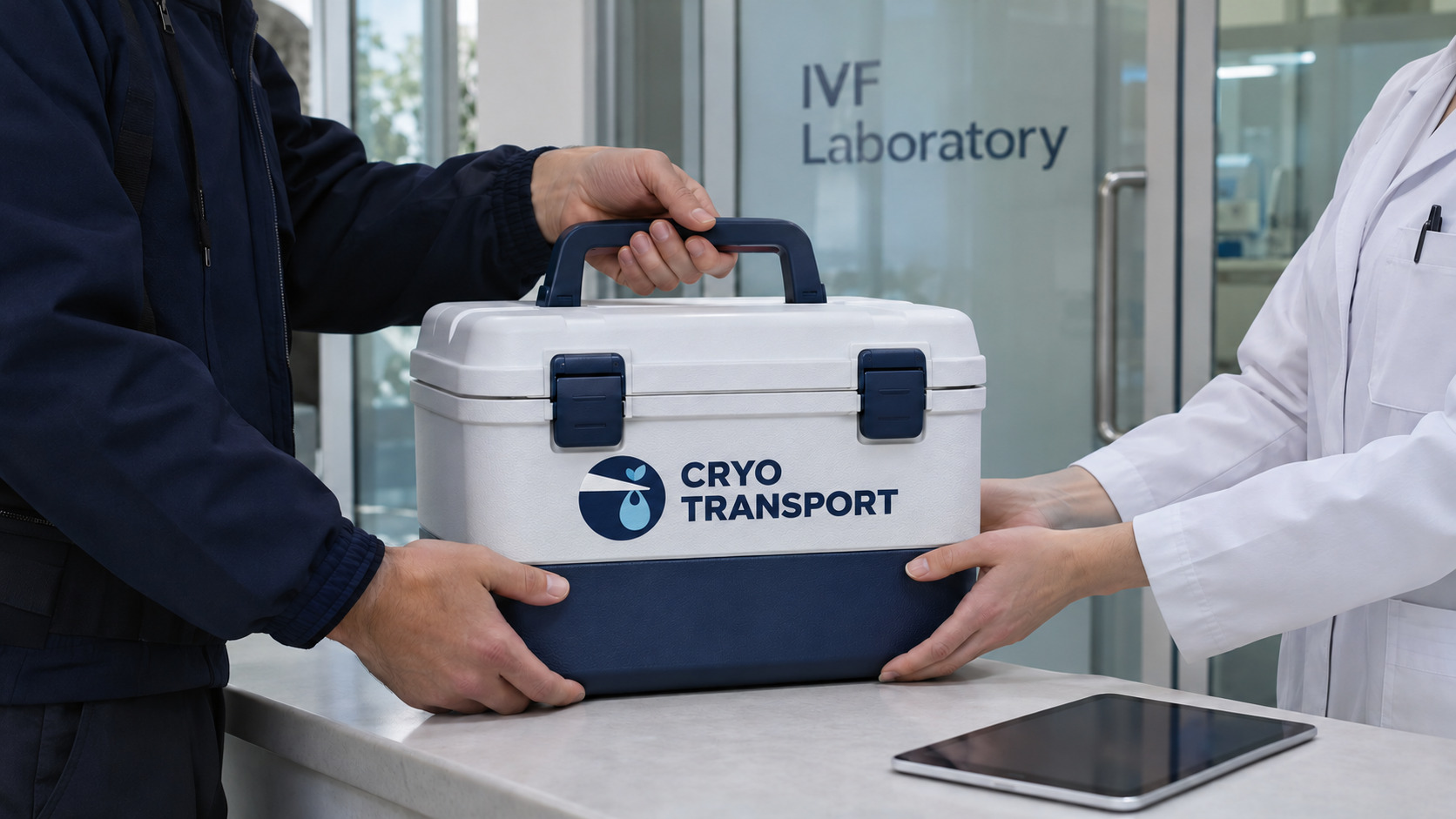
Ask whether document translations are needed and in what form consent forms are accepted. Check the spelling of names and the clinics’ details on all forms. If the patient and partner are in different countries, clarify in advance how each of them can complete the necessary documents without visiting the other clinic in person.
What to Do in Case of a Delay or Route Change
If transporting semen to another country involves a connecting flight, discuss in advance what to do if the first flight is delayed. Clarify whom to contact urgently and how both laboratories will be notified. The feasibility of a backup route must be checked separately: the availability of another ticket does not yet confirm that the new plan is suitable for the sample. In the event of a delay, report the actual time the material was collected, its current stage of transit, and its expected arrival time. If temperature was monitored, provide the available data. The laboratories must know which semen transportation conditions were agreed upon and what deviations occurred. Do not change the temperature conditions based on general advice to “cool it just in case.” Further actions should be agreed upon with specialists who know the sample’s requirements. The carrier clarifies logistical options, while the receiving party determines whether the material can be accepted and subsequently used. The courier’s arrival alone does not confirm that the sample is suitable for treatment.
How to Request an Assessment of Delivery Feasibility and Cost
For an initial inquiry, it is enough to describe the situation without trying to draw up a medical protocol. For example: one partner is in one country, treatment is planned in another, the clinics’ contact details are known, and the expected sample collection date has been determined. Attach the laboratory’s requirements if they are already available. Fresh semen transportation is assessed based on this information, and unknown conditions must be clarified before the shipment is confirmed. You can request a quote from Cryo Transport for international biomaterial transportation. Along with the cost, ask for a preliminary plan: collection and handover times, the coordination procedure with the clinics, and a list of unresolved issues. Price alone makes it difficult to understand whether the offer is suitable for the planned treatment. Clarify which stages are included in the quote and which actions remain the responsibility of the patient or clinics. Also ask what happens if the treatment date or flight schedule changes. Do not consider a preliminary assessment as confirmation that transportation of semen to another country has already been arranged: medical and organizational issues must be resolved before shipment. Before setting the sample collection date, ask the coordinator to check the plan with both laboratories. You should have a confirmed release time, the contact details of the staff member responsible for receiving the material, and a clear communication procedure in case of changes. After that, agree on the final order terms with the carrier.
FAQ
First, the route, laboratory requirements, and receiving time must be agreed upon. Sample collection is scheduled based on these arrangements. Starting to prepare documents after collection means using up time allocated for delivery.
Fresh semen transportation must be completed within the timeframe agreed upon by the laboratories for the specific sample and its intended use. The number of hours stated in the service description does not establish universal sample viability. Clarify when the delivery timeframe begins and by what time the sample must reach the specialist.
The laboratory must approve a suitable container. Semen transportation conditions include requirements for the container material and packaging, so choosing a container independently based only on its capacity or sterility is not appropriate. Find out where to obtain an approved container and who will prepare it for handover.
This depends on the agreed delivery method and the clinics’ requirements. Fresh and cryopreserved materials are transported under different conditions. Do not change the transportation method on your own: first, confirm with the laboratories which option they are prepared to process and receive.
The temperature conditions must be agreed upon with the laboratories. Request written requirements and clarify who is responsible for maintaining them at each stage. General advice on biomaterial storage does not replace instructions for your specific sample.
The receiving laboratory performs the medical assessment. Timely delivery and courier handover do not guarantee that the material is suitable for treatment. Before shipment, clarify with the laboratory what information about sample preparation and transportation conditions it will need upon receipt, and include these details in the handover plan.

