






Embryo Transportation from Israel to Europe: How to Arrange the Shipment of Biological Materials
Transporting embryos from Israel to Europe begins with confirming that both clinics are ready to transfer the material. We coordinate the collection and delivery of the samples, check the transport documents, and select a route with courier accompaniment. We determine whether shipment is possible and establish the timeframe after clarifying the receiving clinic’s requirements: a patient’s decision to change clinics alone is not sufficient to arrange transport. If treatment will continue outside Israel, first tell us where the material is stored and where it needs to be delivered. Even when treatment dates are known, preparing the shipment may require additional time to coordinate the documentation.
Which reproductive materials can be transported
Transporting biological material from Israel may involve cryopreserved embryos, oocytes (egg cells), and frozen sperm. For each request, we clarify the condition of the material and the requirements for its transfer. Cryopreservation means preserving samples at extremely low temperatures; these conditions must also be maintained during transit. When preparing for the transport of cryopreserved embryos, information is needed about the number of samples and the carriers on which they are stored. It is best to request these details from an embryologist: the number of embryos and the number of carriers may differ.
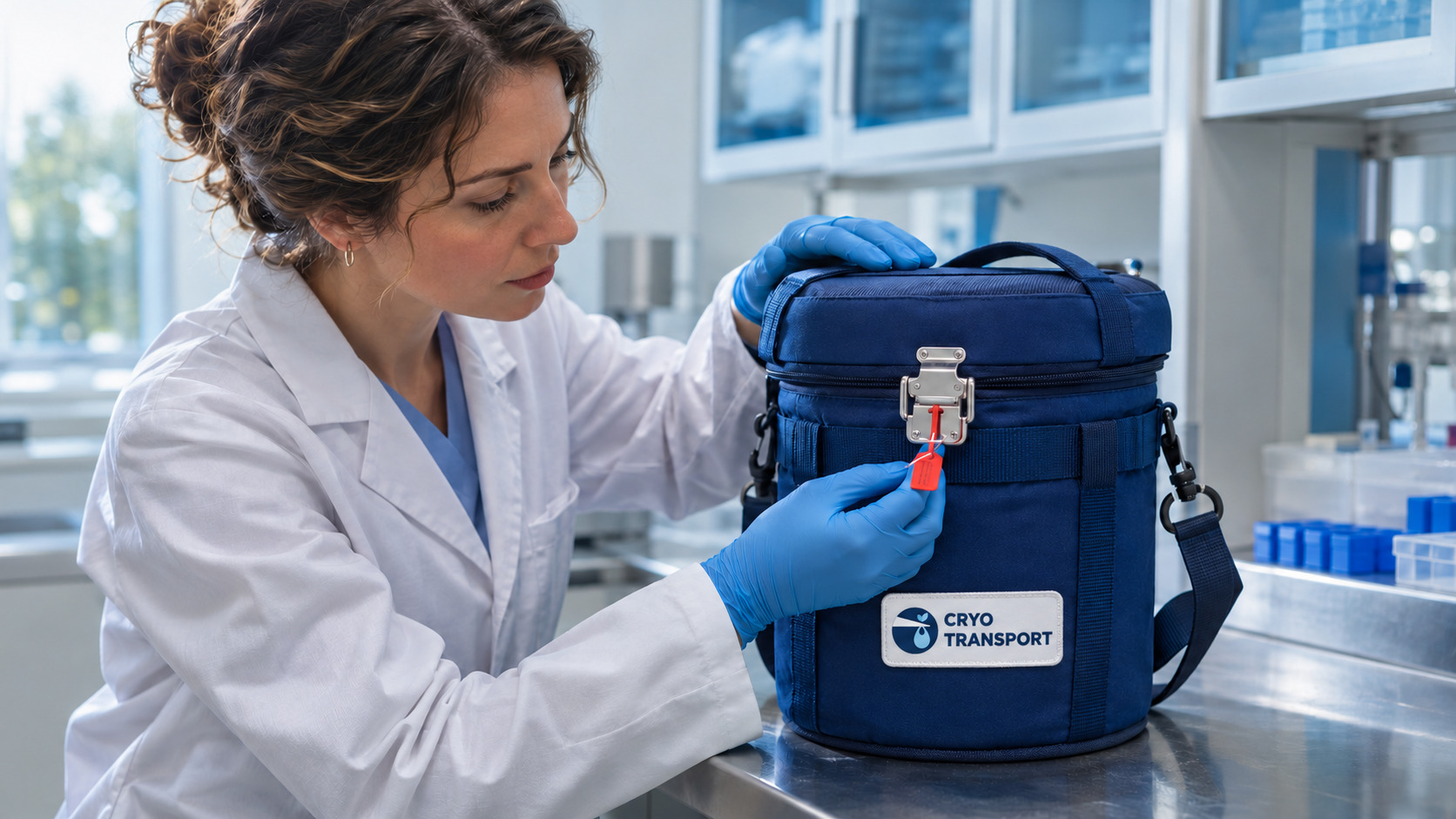
Transporting sperm from Israel also requires clarification of its condition. Fresh and frozen material are transported under different conditions. Here we focus primarily on transport after cryopreservation; we assess the feasibility of shipping other samples separately.
How to coordinate the transfer between clinics
At Cryo Transport, we coordinate communication between the sending and receiving parties regarding transport. The Israeli clinic confirms that it can release the samples. The European clinic checks whether it can accept them for storage or further treatment. We coordinate the transfer of the material, check transport documentation, and arrange logistics. To coordinate the transport of biological material from Israel, provide the contact details of staff members at both clinics who handle such requests. This may be a coordinator, an embryologist, or a cryobank representative. The medical center’s name and the reception desk’s general phone number may not be enough to promptly resolve questions about releasing the material. If sperm is to be transported from Israel, clarify in advance whether the material belongs to the patient or comes from a donor. This affects the questions the receiving clinic will ask the sending clinic. The patient provides the necessary consents; the clinic determines the required signatories and forms for the specific case. Before shipment, we check that the release date is aligned with the receiving clinic’s acceptance schedule. Medical decisions and authorizations remain the responsibility of the clinics and relevant authorities. Arranging transportation does not replace their assessment of whether the samples may be imported and used.
Which documents must be coordinated before transport
The document list is prepared for the specific material and destination. It includes information from the patient and clinics, as well as paperwork accompanying the container during transit.
Consents and identification details
The clinics determine whose consent is required for the transfer and provide the necessary forms. If several people have decision-making rights concerning the embryos, the clinic will clarify the consent requirements. It should not be assumed in advance that a single declaration will suffice. The patient’s details must match the information in the sample documentation. If a surname has changed or the documents use different spellings of a name, report this before arranging the transfer so the clinics can determine how to verify the match.
Medical information about the samples
The receiving party may need information about the origin of the material, the quantity, identifiers, and storage conditions. Medical information, including test results where necessary, is provided to the extent requested for its review. A universal list of tests for all European clinics is not applicable here. The sending laboratory must understand what information the recipient needs and in what format it should be provided. If documents are missing, the issue must be resolved before scheduling the handover to the courier.
Supporting documents for the route
Transporting embryos from Israel to Europe requires checking the documents needed for export, import, and transit along the selected route. We clarify the transport requirements and coordinate the accompaniment of the container with the destination country in mind. Documents relating to the material and documents relating to transportation serve different purposes. Some allow the clinic to identify and accept the samples, while others are needed to move them. Having transport paperwork does not in itself confirm that the clinic is ready to receive the samples.
What depends on the destination country in Europe
For an EU country, shipment from Israel is considered an import from a third country. Under EU Directive 2015/566, such imports, subject to the specified exceptions, are carried out by establishments authorized for the relevant activities. Therefore, the organization responsible for the import must be identified before transport. Transporting biological material from Israel to a European country outside the EU is assessed under the rules applicable to that destination. We clarify the requirements for the specific recipient and material, including differences between a patient’s own samples and donor samples. The EU uses the SEC (Single European Code) for tissues and cells. It helps trace their origin and movement. The system has exceptions, including for reproductive cells from partners; the responsible establishment determines whether it applies to a particular transfer. Further details are available in the European Commission’s guidance.

When sperm from Israel comes from a donor, the receiving party must carry out a separate check. Delivering the container and obtaining permission to use its contents in treatment are two different matters.
How the route is selected and courier accompaniment arranged
Cryogenic container and transport conditions
Cryopreserved samples are transported in a Dry Shipper, a specialized cryogenic shipping container. It maintains cryogenic conditions during delivery. Transporting sperm from Israel after freezing requires maintaining cryogenic conditions. When planning the transport of frozen sperm, we clarify the types of carriers and the laboratories’ handover requirements. We coordinate equipment and transfer conditions with the laboratories.
Courier accompaniment and route changes
The route must take account of laboratory opening hours and the container release time, connections, and the requirements for accepting it on an aircraft. A short flight does not always mean a short delivery time: after arrival, the material still has to be handed over to the receiving party. The courier accompanies the container and hands it over according to the agreed procedure. If a flight is delayed, the onward schedule and the possibility of acceptance at a new time are checked. An alternative route is considered for each individual shipment; the availability of a suitable alternative flight cannot be guaranteed in advance.
What information to provide for a cost and timeframe estimate
For an initial estimate, prepare the following:
- the city and name of the sending clinic in Israel;
- the destination country, city, and clinic;
- the type and condition of the material;
- the number of samples and details of their carriers, if known;
- whether the material is the patient’s own or donor material;
- preferred dates and any time constraints;
- contact details of staff members at both clinics;
- a list of conditions already agreed upon and documents currently available.
We calculate the cost of transporting biological material from Israel based on these details. If some information is not yet known, mention this in your request. The preliminary estimate may change after the route and handover conditions are clarified. When planning to transport sperm from Israel, be sure to state whether it is frozen. If you need to transport embryos from Israel to Europe, request information about the samples and carriers from the clinic. Preparation time and transit time are calculated separately. Document checks begin before the courier collects the material, so the flight duration alone cannot determine the total time needed to organize delivery.
How transportation works: from the initial request to receipt of the material
We begin with your request and the initial details. We then confirm that the clinics are ready for the transfer and coordinate the documents. Once the requirements are clear, we propose a route, price, and dates based on the clinics’ schedules. Before the material is released, both parties must know who will hand over the container and who will receive it at the destination.
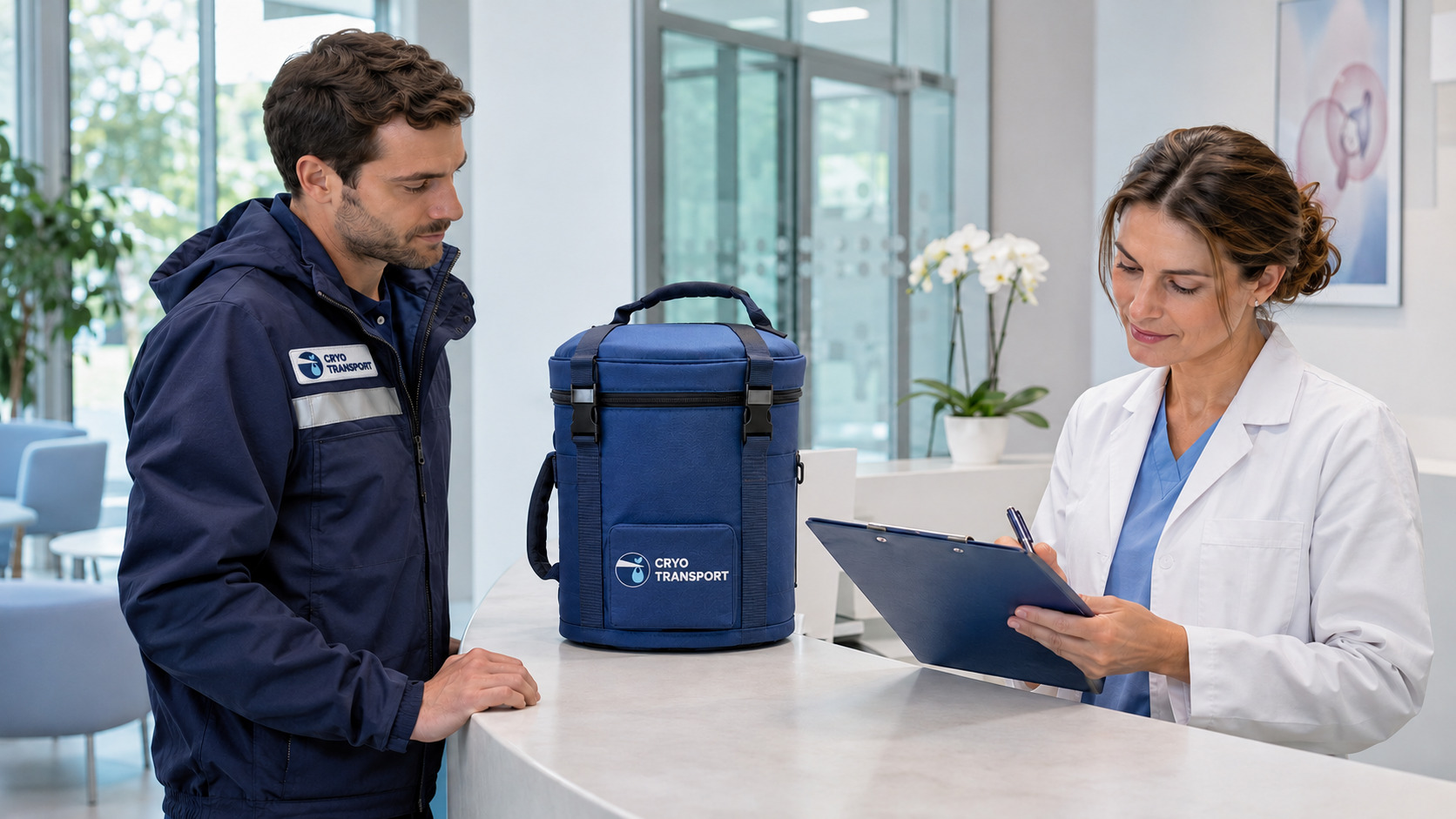
We begin transporting embryos from Israel to Europe after the necessary arrangements have been agreed upon. The courier collects the material from the clinic and accompanies the container along the route. On arrival, it is handed over to the receiving party, with the transfer documented. Transporting biological material from Israel is completed when the clinic confirms receipt. After delivery, ask the coordinator about storage conditions and preparation for treatment. The medical schedule is agreed upon with the treating team, taking into account when the material is actually ready for use. To obtain a delivery estimate from Cryo Transport, provide the names of both clinics, the type of material, and your preferred dates. If the recipient has not yet been selected, first check whether the prospective clinic accepts samples from Israel. Its answer will help determine which approvals and arrangements are needed before planning the route.
FAQ
Whether the embryos can be released without your presence depends on the clinic’s policies and consent requirements. Ask the clinic coordinator about the procedure for releasing the material to a courier and the required documentation. Having a dedicated courier accompany the container does not eliminate the clinic’s requirements regarding patient involvement.
Yes. Provide the information you currently have and indicate that the number of samples is still being confirmed. We can discuss the route and transportation preparations. To refine the quote, ask the laboratory to confirm the number of samples and carriers, as the number of embryos alone is not always sufficient to determine the shipment’s contents.
This option must be agreed upon with the clinic storing the material. The embryologist will clarify which samples can be selected for transportation and how they are arranged on the carriers. The documentation must clearly specify which samples will be shipped and which will remain in storage.
Notify us before shipment and provide the contact details of the new receiving clinic. We will need to verify its readiness to accept the material, update the necessary arrangements, and adjust the route if required. Confirmation from the previous receiving clinic does not automatically apply to the new one.
The preferred delivery date should be discussed in advance with the clinic and the transportation provider. Scheduling depends on document readiness, the receiving clinic’s availability, and the available transportation route. Before finalizing your treatment schedule, ask your coordinator how much time is required between the arrival of the samples and the procedure for your specific treatment program.

